
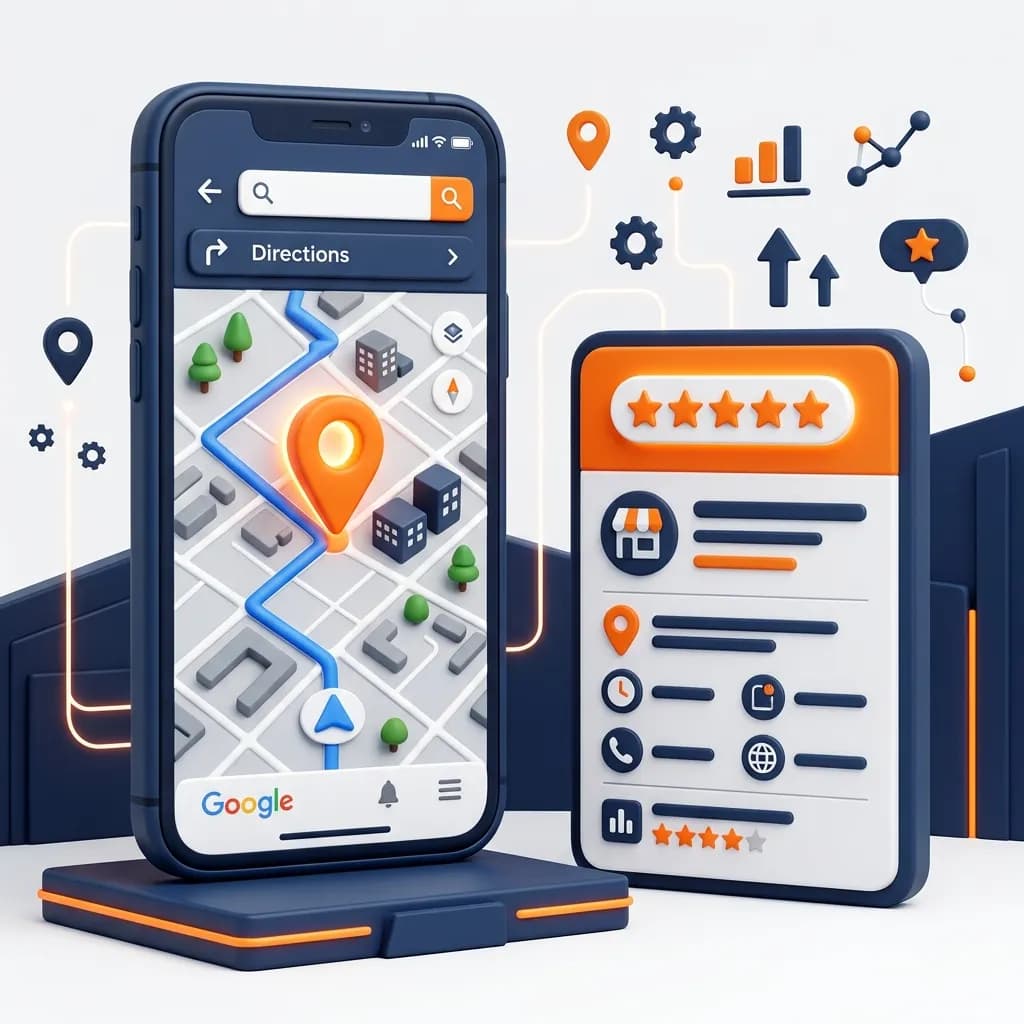
A website should do more than simply make your business look professional.
It should explain what you offer, attract the right visitors, build trust, generate enquiries, support your sales process, and grow with your business.
Yet many businesses still start their website journey by choosing a ready-made template and trying to fit their business into it.
That approach may be quick. But it doesn't always produce the right result.
Every business is different. A travel company has different requirements from an insurance agency. A hotel needs different functionality from a real estate company. A hospital website has completely different user requirements from an e-commerce business.
That is where custom website development becomes valuable.
Instead of asking your business to fit into a predefined template, a custom website is designed and developed around your actual business requirements, customers, services, and future goals.
What Is Custom Website Development?
Custom website development means creating a website specifically based on the requirements of a particular business.
Rather than selecting a template and changing its colours, images, and text, the website structure, user experience, features, integrations, and content flow are planned according to the business.
For example, a travel agency may need:
- Destination pages
- Tour package management
- Enquiry forms
- WhatsApp integration
- Itinerary pages
- Lead tracking
- Google Analytics
- Search Engine Optimization
- Content management
- Customer enquiry management
An insurance agent may need something completely different:
- Insurance product pages
- Lead enquiry forms
- Policy-related information
- WhatsApp integration
- Callback requests
- Customer enquiry management
- Local SEO
- Service-specific landing pages
Both businesses need websites.
But they don't need the same website.
That is the fundamental idea behind requirement-based website development.
Why Should a Website Be Built Around Business Requirements?
A website is not just a digital brochure.
It is part of your business infrastructure.
Before development starts, the important question should not be:
“Which template should we use?”
The better question is:
“What does the business need this website to achieve?”
The answer determines everything from the website structure to the features and user journey.
1. Your Website Matches Your Actual Business
A template is designed for a broad audience.
Your business isn't.
A custom website allows the development process to start with your business model.
For example, a real estate company may need users to search properties by:
- Location
- Property type
- Budget
- Bedrooms
- Purpose
- Amenities
A standard business template may not provide that experience.
A custom solution can.
The website becomes an extension of the business rather than simply an online presentation.
2. Better User Experience
Visitors don't come to a website just to see attractive design.
They come with a purpose.
They may want to:
- Find a service
- Check pricing
- View properties
- Explore tour packages
- Contact an insurance agent
- Book an appointment
- Request a quotation
- Make an enquiry
A custom website allows the user journey to be designed around those actions.
Instead of making visitors search through multiple pages, the website can guide them naturally toward the information and action they need.
Good UX is not about adding more animations or visual effects.
It is about making the right information available at the right time.
3. Your Website Can Be Designed for Lead Generation
Many businesses make the same mistake.
They focus heavily on the appearance of the website but don't think enough about what happens after a visitor arrives.
A business website should have a clear conversion strategy.
Depending on the business, that might include:
- Enquiry forms
- WhatsApp buttons
- Call buttons
- Quote requests
- Consultation bookings
- Callback requests
- Downloadable brochures
- Newsletter subscriptions
- Product enquiries
A custom website can place these conversion points where they make sense within the customer journey.
The goal isn't simply:
Visitor → Website
It should be:
Visitor → Information → Trust → Action → Enquiry
4. Better SEO Structure
Search Engine Optimization should not be added as an afterthought.
The website structure itself should support SEO from the beginning.
A custom website can be developed with:
- SEO-friendly URLs
- Proper heading structure
- Metadata
- Schema markup
- Internal linking
- Fast-loading pages
- Mobile responsiveness
- Optimized images
- XML sitemap
- Robots.txt
- Search Console integration
- Industry-specific landing pages
- Location-based pages where appropriate
For example, instead of having one generic service page called:
“Our Services”
a business could create dedicated pages such as:
Website Design for Real Estate Companies
Website Design for Insurance Agents
Hotel Website Development
Travel Agency Website Design
These pages can target specific search intent and specific customer groups.
5. Easy to Add Future Features
Businesses change.
Your website should be able to change with them.
Today you may only need:
Website + Enquiry Form
Next year you may need:
Website + CMS + CRM + Booking System + Payment Gateway
If the original website wasn't planned properly, adding these features later can become expensive and complicated.
Custom development gives you greater control over how the website is structured for future expansion.
Custom Website vs Template Website
A template website isn't necessarily bad.
For a small business with a very simple requirement, a template can sometimes be a practical starting point.
But there is an important difference.
| Template Website | Custom Website |
|---|---|
| Predefined structure | Requirement-based structure |
| Limited design flexibility | Flexible UI/UX |
| Generic user journey | Business-specific user journey |
| Limited functionality | Custom functionality |
| Often plugin-dependent | Features can be developed specifically |
| Difficult to differentiate | Unique brand experience |
| May require compromises | Built around business needs |
| Limited scalability | Designed for future expansion |
The right choice depends on the business.
If your requirement is unique, your website should not be forced into a generic structure.
Custom Does Not Mean Complicated
Some business owners hear “custom website” and immediately think:
“That means it will be expensive and complicated.”
Not necessarily.
Custom development does not mean adding unnecessary features.
It means building the right features for your business.
If your business only needs five pages, a contact form, WhatsApp integration, SEO structure, and a simple CMS, the website can be built around exactly those requirements.
If another business needs advanced functionality, the development approach can be expanded accordingly.
The objective is not to build the biggest website.
The objective is to build the right website.
The Process Behind a Requirement-Based Website
A professional custom website project should begin before coding.
Step 1: Understand the Business
The first stage is understanding:
- What the company does
- Who its customers are
- What services it offers
- Where customers come from
- What problems customers have
- How customers currently contact the business
- What the business wants the website to achieve
Step 2: Define Website Requirements
Once the business is understood, the required pages and functionality can be identified.
This could include:
- Website pages
- Landing pages
- Forms
- CMS
- Admin panel
- Booking functionality
- Payment integration
- CRM integration
- Analytics
- SEO requirements
Step 3: Plan the Website Structure
The website architecture is then planned.
This includes navigation, page hierarchy, URLs, content structure, and internal linking.
This stage is particularly important for SEO.
Step 4: Design the User Experience
The UI/UX is designed around the target audience.
The objective is to make the website:
- Easy to understand
- Easy to navigate
- Mobile-friendly
- Visually professional
- Conversion-focused
Step 5: Develop the Website
The approved design is then converted into a functional website.
Depending on the requirements, the project may include frontend development, backend development, database integration, APIs, CMS functionality, authentication, third-party integrations, and other custom features.
Step 6: SEO and Technical Optimization
Before launch, the website should be checked for:
- Mobile responsiveness
- Page speed
- Technical SEO
- Metadata
- Sitemap
- Robots.txt
- Structured data
- Broken links
- Image optimization
- Indexability
Step 7: Launch and Measure
Launching the website is not the end.
Google Analytics and Google Search Console can be connected to monitor:
- Website visitors
- Search queries
- Top-performing pages
- User behaviour
- Enquiries
- Conversion opportunities
This information can then be used to improve the website over time.
Who Can Benefit From Custom Website Development?
Custom website development can be particularly valuable for businesses with specific customer journeys or operational requirements.
Real Estate Companies
Property listings, filters, locations, enquiry forms, agent information, and lead capture can be structured around the business.
Travel Agencies
Destination pages, tour packages, itineraries, enquiry forms, WhatsApp integration, and booking-related functionality can be built according to the agency's workflow.
Insurance Agents
Insurance products, service pages, enquiry forms, callback requests, WhatsApp communication, and local SEO pages can be developed around customer needs.
Hotels
Room information, amenities, location pages, enquiry systems, booking integrations, offers, and customer communication can be incorporated.
Hospitals and Healthcare Businesses
Services, departments, doctors, appointment requests, locations, and patient-focused information can be organized around how people actually search for healthcare services.
E-commerce Businesses
Product catalogues, customer accounts, payments, inventory, orders, shipping, coupons, and other requirements can be integrated according to the business model.
Your Website Should Support Your Business, Not Just Represent It
There is a big difference between:
“We have a website.”
and
“Our website helps our business.”
The first is simply having an online presence.
The second means the website contributes to marketing, sales, customer communication, and growth.
A well-planned custom website can become a central part of your digital strategy.
It can attract visitors through SEO.
It can educate visitors through content.
It can build trust through portfolio, testimonials, and business information.
It can generate enquiries through strategically placed CTAs.
And it can connect with other systems that your business uses.
How Much Does a Custom Website Cost?
There is no single price for custom website development.
The cost depends on the actual requirements.
Factors can include:
- Number of pages
- Design complexity
- Custom functionality
- CMS requirements
- Admin panel
- API integrations
- Payment gateway
- Booking system
- Database requirements
- SEO requirements
- Third-party integrations
- Ongoing maintenance
This is why a requirement-based approach is often more useful than choosing a website package based only on the number of pages.
Two businesses may both need a 10-page website but have completely different development requirements.
What Should You Ask Before Hiring a Website Development Company?
Before starting a website project, ask the development company:
- Will the website be designed according to my business requirements?
- Is the design customised or template-based?
- Can I add new features in the future?
- Will I have access to an admin panel or CMS if required?
- Is SEO considered during development?
- Will the website be mobile responsive?
- Can you integrate WhatsApp, forms, CRM, payment, or booking systems?
- Will analytics and Search Console be configured?
- Who will maintain the website after launch?
- Can you show relevant previous projects?
These questions can help you understand whether you're buying a website or investing in a digital solution.
Final Thoughts
Your business is unique.
Your customers are unique.
Your sales process is unique.
So your website shouldn't necessarily look and work like everyone else's.
A successful website starts with understanding the business—not choosing a template.
When the website structure, design, functionality, SEO, and customer journey are planned around your actual requirements, the result can be more useful, scalable, and effective for your business.
At Joy Digital, we focus on creating websites based on the requirements of the business rather than simply delivering a predefined template.
Whether you are a real estate company, travel agency, insurance agent, hotel, healthcare business, professional service provider, or growing company, the website can be planned around your goals, audience, and workflow.
Don't ask, “Which website template should I choose?”
Ask:
“What should my website do for my business?”
That's where a truly custom website begins.
Ready to Build a Website Around Your Business?
If you have a website requirement, share your business details, goals, required features, and target audience.
The right website starts with understanding the requirement first—and development comes next.
Recommended Services & Solutions
Digital marketing strategist and Next.js web developer focusing on search optimization and conversion rate growth.