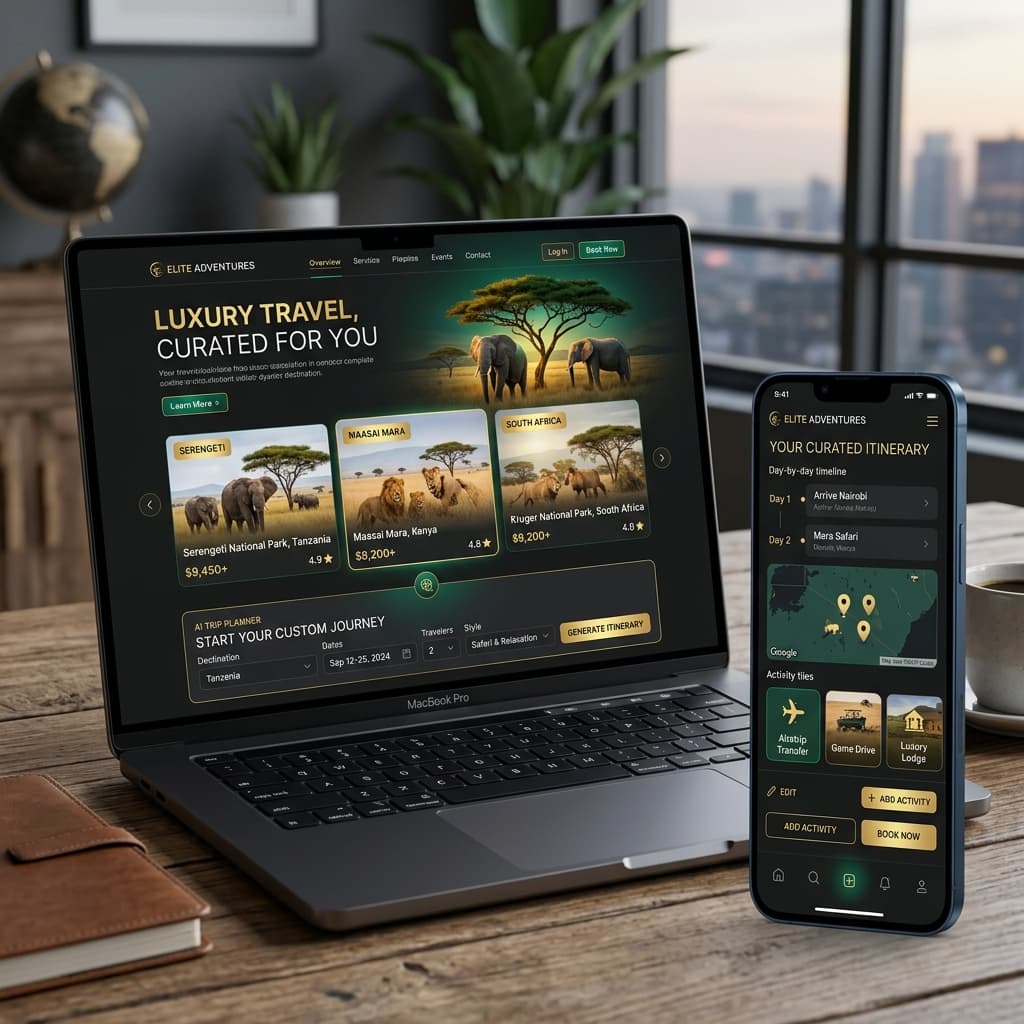
Here are the top 15 travel website features 2026 tour operators need to consider.
A few years ago, a tour operator could build a simple website with destination photos, tour packages, an About Us page and a Contact form.
That is no longer enough.
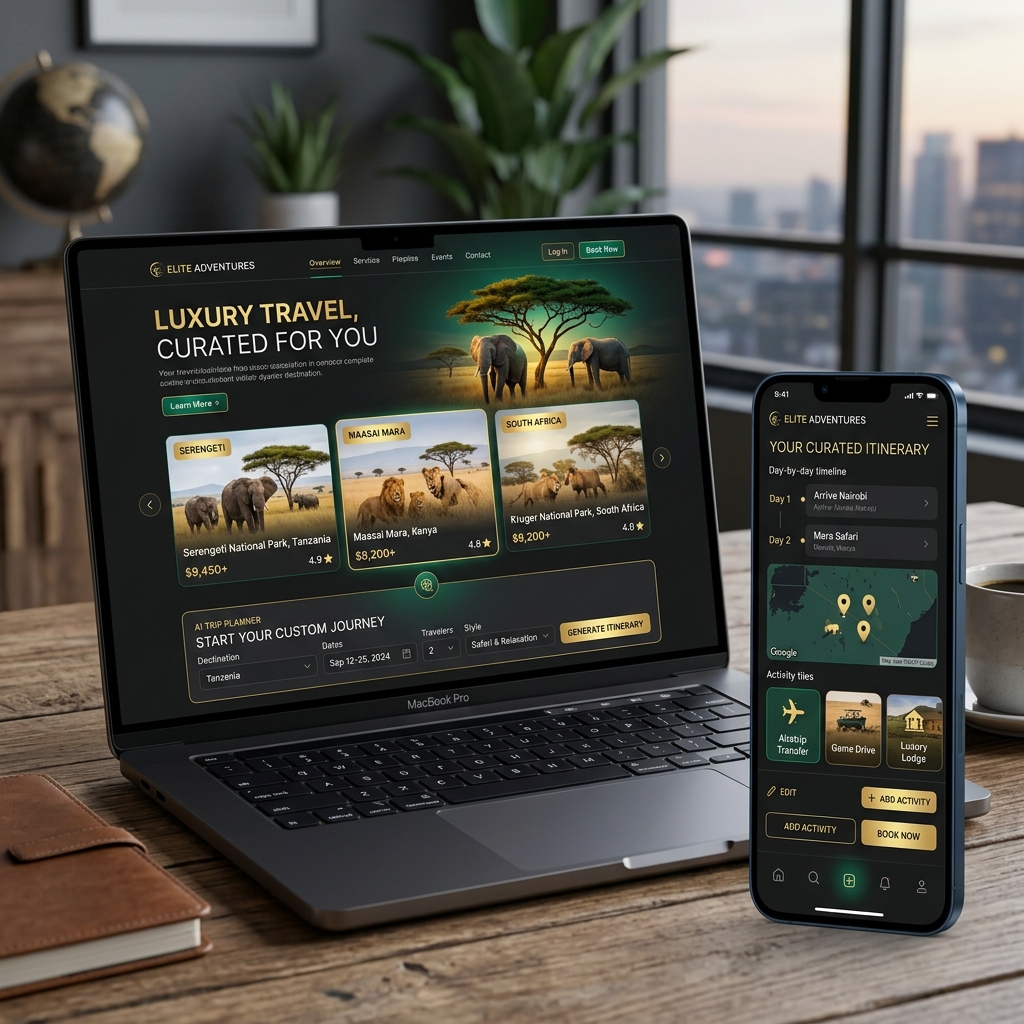
In 2026, travelers are discovering destinations through Google, YouTube, social media and AI-powered search tools. They are comparing itineraries, reading reviews, checking experiences and looking for personalized recommendations before they contact a travel company.
Google's latest travel research shows that Google and YouTube remain important touchpoints throughout the travel journey, while 85% of surveyed Indian travelers prefer to book their trips online.
At the same time, AI is becoming a major part of trip planning. Agoda reports that 68% of Indian travelers are likely to use AI for their next trip.
This means your travel website is no longer just an online brochure.
It needs to become a discovery, trust-building and lead-generation platform.
Here are 15 features every modern tour operator and travel company should consider in 2026.
1. AI-Powered Trip Planner
One of the biggest changes in travel is the rise of AI-assisted trip planning.
Instead of browsing dozens of pages, travelers increasingly expect to describe what they want and receive a relevant itinerary.
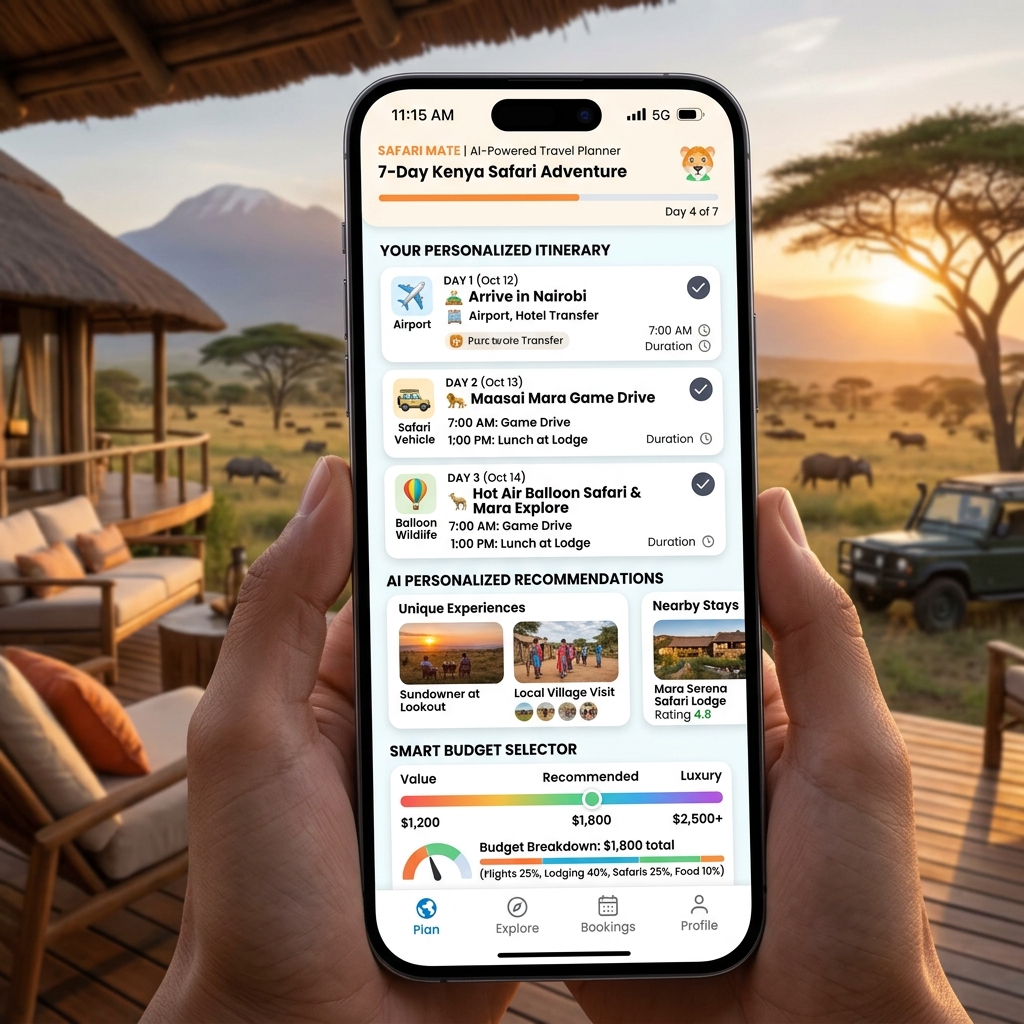
For example:
"Create a 7-day Namibia safari for two people with wildlife, photography and luxury accommodation."
Your website could ask:
- Destination
- Travel dates
- Number of travelers
- Budget
- Travel style
- Interests
- Preferred accommodation
- Activities
The system can then generate a suggested itinerary.
This makes the website feel less like a traditional travel brochure and more like a personal travel assistant.
2. Personalized Tour Recommendations
Not every traveler wants the same holiday.
A honeymoon couple, a family with children and a wildlife photographer may visit the same destination but expect completely different experiences.
Your website should therefore recommend tours based on visitor preferences.
For example:
Adventure: Safari + Hiking + Camping
Luxury: Private transfers + Luxury lodges + Premium experiences
Family: Child-friendly accommodation + Easy activities + Flexible itinerary
Photography: Wildlife locations + Golden-hour experiences + Photography guides
Personalization can make the journey from website visitor to enquiry much more relevant.
3. Custom Itinerary Builder
Pre-designed packages are useful, but international travelers often want flexibility.
A custom itinerary builder allows visitors to create their own trip by selecting:
- Destinations
- Number of days
- Activities
- Hotels
- Transfers
- Excursions
- Travel dates
The final itinerary can then be submitted as an enquiry.
This is particularly valuable for destination management companies, safari operators, luxury travel companies and inbound tour operators.
4. Strong Direct Booking Experience
Travel discovery is increasingly happening across AI search and social platforms, but travelers can still be directed back to an operator's website to complete the purchase.
Your website should therefore make booking or enquiry as simple as possible.
Instead of hiding the CTA at the bottom of a page, use clear actions such as:
Book This Tour
Request a Quote
Customize This Trip
Check Availability
Talk to a Travel Expert
The fewer unnecessary steps, the better.
5. WhatsApp and Instant Enquiry
For many travel businesses, especially in India and international B2C markets, WhatsApp can be one of the fastest ways to convert an interested visitor into a conversation.
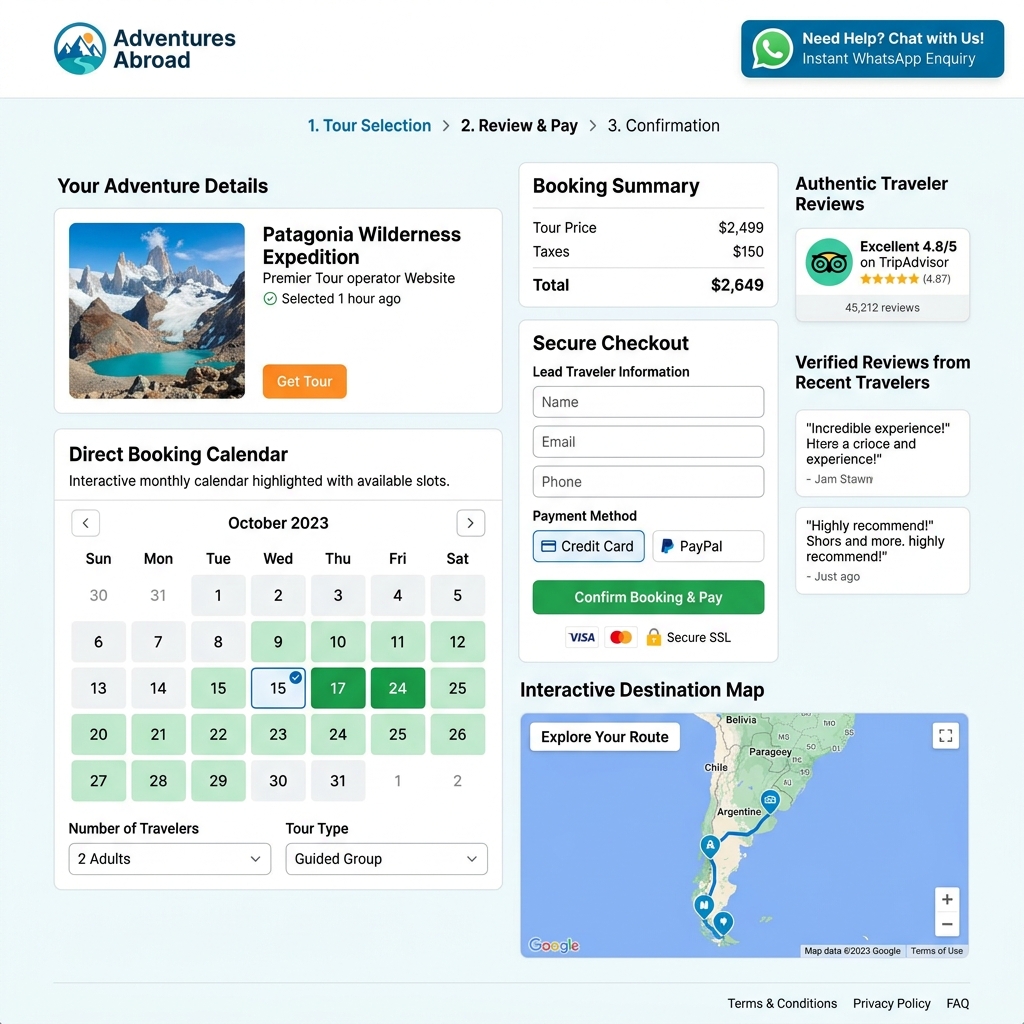
A visitor should be able to click:
Chat With a Travel Expert
and immediately start a WhatsApp conversation.
You can also pre-fill useful information such as:
"Hi, I'm interested in your 7-day Namibia Safari package."
This gives the sales team useful context from the first message.
6. AI Search Optimization
SEO is changing.
Travel companies are no longer competing only for Google rankings.
They also need to become visible when travelers ask AI platforms questions such as:
"Best safari operators in Namibia"
"Best luxury African safari for couples"
"Where should I go in Africa in October?"
"Best family tour operators in Europe"
AI-powered travel discovery is growing rapidly. Phocuswright reported that 56% of active U.S. travelers had used AI for planning, booking or in-destination assistance for at least one trip during the previous 12 months.
This creates a new opportunity:
AI Search Optimization / GEO.
Travel websites should publish useful, structured and trustworthy content that AI systems can understand and reference. Read more about how to optimize your digital assets in our AI Search Optimization (AEO/GEO) Guide.
7. Destination-Based SEO Pages
Instead of having only one generic "Tours" page, create dedicated destination pages.
For example:
- Namibia Safari Tours
- Botswana Safari Tours
- Kenya Safari Tours
- Tanzania Safari Tours
- South Africa Tours
- European Luxury Tours
- Maldives Honeymoon Packages
Each page should have unique content, useful FAQs, itineraries, images, reviews and strong conversion CTAs.
This gives search engines more relevant pages to understand and rank.
8. Detailed Itinerary Pages
A tour page should answer the questions a traveler is likely to have before contacting you.
Include:
- Tour overview
- Duration
- Starting location
- Daily itinerary
- Accommodation
- Activities
- Meals
- Transportation
- What's included
- What's excluded
- Best time to travel
- Price information
- FAQs
- Reviews
- Enquiry CTA
A detailed itinerary also creates more opportunities to rank for long-tail searches.
9. Authentic Reviews and Trust Signals
AI can help travelers discover options.
But trust still matters enormously when money is involved.
Expedia Group's 2026 research found that travelers still prefer trusted travel brands for booking even as they increasingly use AI for planning and discovery.
Your website should therefore showcase:
- Google reviews
- TripAdvisor reviews
- Customer testimonials
- Real traveler photographs
- Company certifications
- Awards
- Partner logos
- Years of experience
- Expert profiles
- Contact information
Don't just say:
"We provide the best tours."
Show travelers why they should trust you.
10. Real Travel Photos and Video
Travel is visual.
A stock image of a safari vehicle cannot compete with a genuine photograph taken during your own client's trip.
Use:
- Real customer photos
- Destination videos
- Short-form travel videos
- Hotel walkthroughs
- Safari footage
- Local experiences
- Tour guide videos
- YouTube content
Video is especially important because Google research identifies YouTube as a major touchpoint throughout the Indian travel purchase journey.
11. Hidden-Gem and Experience-Based Content
Travelers are increasingly interested in experiences beyond the most crowded tourist attractions.
Recent European tourism trends show growing interest in smaller towns, inland destinations and less internationally saturated locations.
This creates an excellent content opportunity.
Instead of only writing:
"Top 10 Places to Visit in Italy"
create content such as:
"7 Hidden Italian Destinations Most Tourists Miss"
or:
"5 Authentic Local Experiences to Add to Your Italy Trip"
This type of content can attract travelers earlier in the buying journey.
12. Mobile-First Design
Most travel research happens while people are using their phones.
Your website needs to work perfectly on:
- Mobile
- Tablet
- Desktop
Important elements should remain easy to access:
Enquire Now
Call
Book Now
A beautiful desktop website that is difficult to use on mobile can lose potential customers.
13. Smart Lead Capture
A basic:
Name + Email + Message
form is not always enough.
Instead, build a travel-specific enquiry form.
Ask:
Where are you travelling?
When do you want to travel?
How many people?
What's your approximate budget?
What type of experience are you looking for?
How would you like us to contact you?
This gives the sales team better-qualified leads.
14. CRM and Enquiry Management
Generating enquiries is only half the job.
The travel company also needs to manage them properly.
A modern travel website can connect enquiries to a CRM where the team can manage:
New Lead → Contacted → Itinerary Sent → Follow-up → Negotiation → Confirmed → Lost
This becomes especially useful for companies receiving enquiries from Google, social media, WhatsApp and the website.
15. Analytics and Conversion Tracking
A travel company should know what is actually generating business.
Track:
- Tour page views
- WhatsApp clicks
- Phone calls
- Enquiry submissions
- Quote requests
- Booking clicks
- Popular destinations
- Traffic sources
- Organic search traffic
- AI-generated traffic
- Conversion rate
Instead of asking:
"How many visitors did our website get?"
you can ask the more important question:
"How many qualified travel enquiries did our website generate?"
That is the metric that matters.
What Should a Modern Travel Website Look Like?
A strong 2026 travel website should connect the complete customer journey:
Google / AI Search / YouTube / Social Media
↓
Destination Content
↓
Tour / Experience Page
↓
Personalized Recommendation
↓
Custom Itinerary
↓
Enquiry / WhatsApp / Booking
↓
CRM
↓
Follow-up
↓
Booking
This is much more powerful than simply displaying tour packages.
Why Custom Travel Website Development Matters in 2026
Every travel company has a different business model.
A safari operator may need itinerary management and custom enquiries.
A luxury travel company may need personalized trip planning.
A destination management company may need B2B enquiry management.
A travel agency may need booking integrations.
A tour operator may need packages, payments, CRM and WhatsApp.
That's why a generic template may not always be the best solution.
A custom travel website can be designed around the company's:
- Destinations
- Customer journey
- Sales process
- Booking model
- Marketing strategy
- CRM
- SEO strategy
- Content strategy
The goal isn't simply to create a website.
The goal is to create a digital system that helps the travel company attract, convert and manage travelers. Learn more about our specialized Travel Website Development Services.
The Future of Travel Websites Is Not Just "More Features"
The biggest change isn't that travel websites need 50 new features.
The real change is this:
Travel websites are becoming intelligent sales platforms.
AI helps travelers discover and plan.
Content helps them understand.
Reviews build trust.
Personalization makes the experience relevant.
Direct booking makes conversion easier.
CRM helps the business follow up.
Analytics shows what actually works.
And SEO + AI Search Optimization helps the company get discovered in the first place.
Final Thoughts
The global travel industry is moving toward a more connected and personalized digital journey.
Travelers are using AI more frequently for research and planning, while trusted travel brands remain important when it comes to making the final booking decision.
For tour operators and travel agencies, this means your website should no longer be treated as an online brochure.
It should be treated as a 24/7 digital sales channel.
If you're planning a new travel website in 2026, focus on these five areas first:
Discoverability + Trust + Personalization + Conversion + Automation
That's where the next generation of travel websites is heading.
Frequently Asked Questions
What features should a travel website have in 2026?
A modern travel website should include destination SEO pages, detailed itineraries, online enquiry forms, WhatsApp integration, reviews, video content, personalization, booking functionality, analytics and CRM integration.
How can AI improve a travel website?
AI can help with personalized itinerary generation, destination recommendations, customer support, travel FAQs, lead qualification and trip planning.
Is SEO still important for travel websites in 2026?
Yes. SEO remains important, but travel companies should also consider optimization for AI-powered search and conversational discovery.
Should a tour operator have a custom website?
If the company needs custom itineraries, advanced enquiries, CRM integration, booking workflows or personalized experiences, a custom website can provide significantly more flexibility than a basic template website.
How can a travel website generate more enquiries?
Use strong destination SEO, detailed tour pages, real reviews, clear CTAs, WhatsApp integration, custom enquiry forms, useful travel content and conversion tracking.
About Joy Digital
At Joy Digital, we build custom websites for businesses that want more than a basic online presence.
For tour operators and travel companies, we can create conversion-focused websites with:
- Custom UI/UX
- Tour and destination pages
- Custom itinerary features
- WhatsApp integration
- Enquiry management
- CMS/Admin panel
- SEO-friendly architecture
- CRM integration
- Analytics and conversion tracking
- AI-ready content structure
Planning a new travel website?
Let's build a website designed not just to showcase your tours, but to help you generate more qualified enquiries and direct bookings.
Request a Custom Travel Website Consultation
Related Joy Digital Services:
Recommended Related Resources
Frequently Asked Questions
Digital marketing strategist and Next.js web developer focusing on search optimization and conversion rate growth.