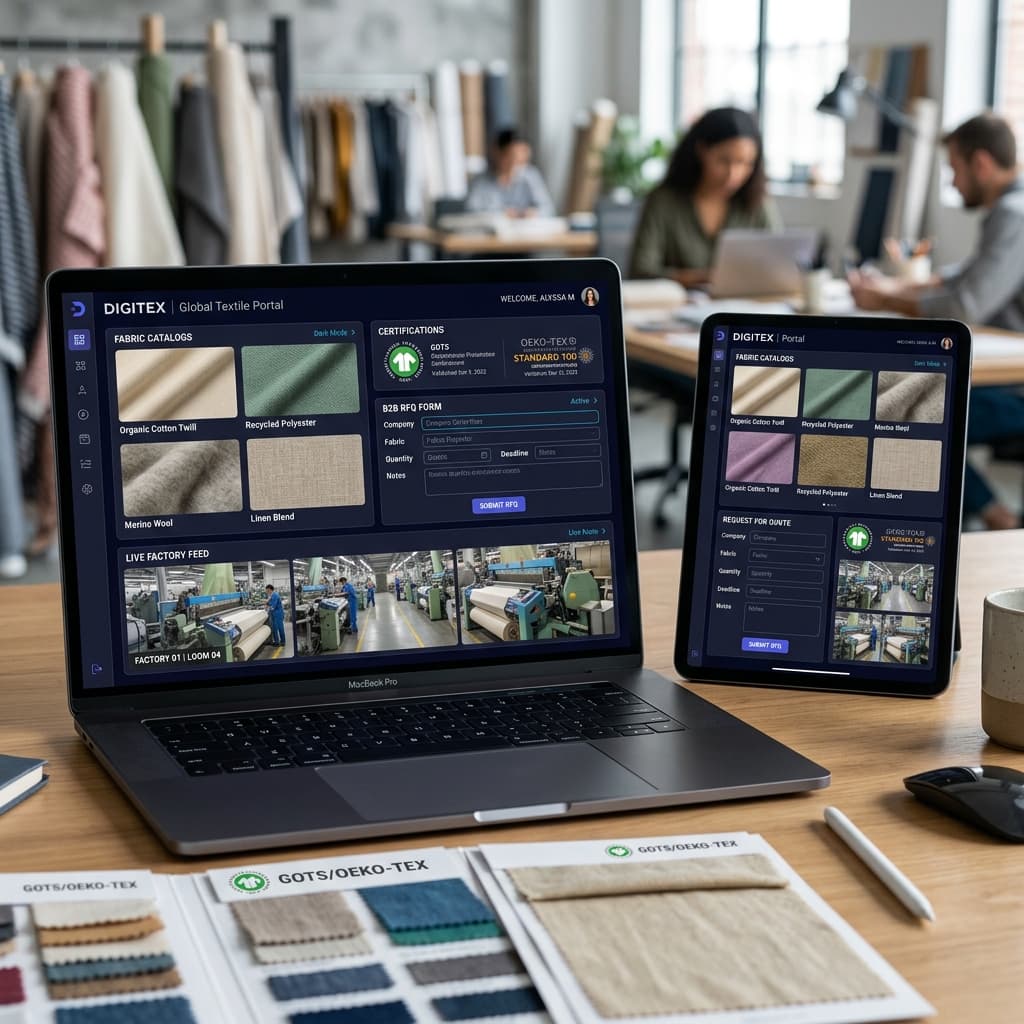
The textile industry is global.
A buyer in Germany can be looking for a fabric manufacturer in India. A fashion brand in the UK may be searching for a private-label garment manufacturer. A wholesaler in the United States could be comparing textile suppliers from India, Turkey, Bangladesh and Vietnam.
Before sending an enquiry, many of these buyers will visit the manufacturer's website.
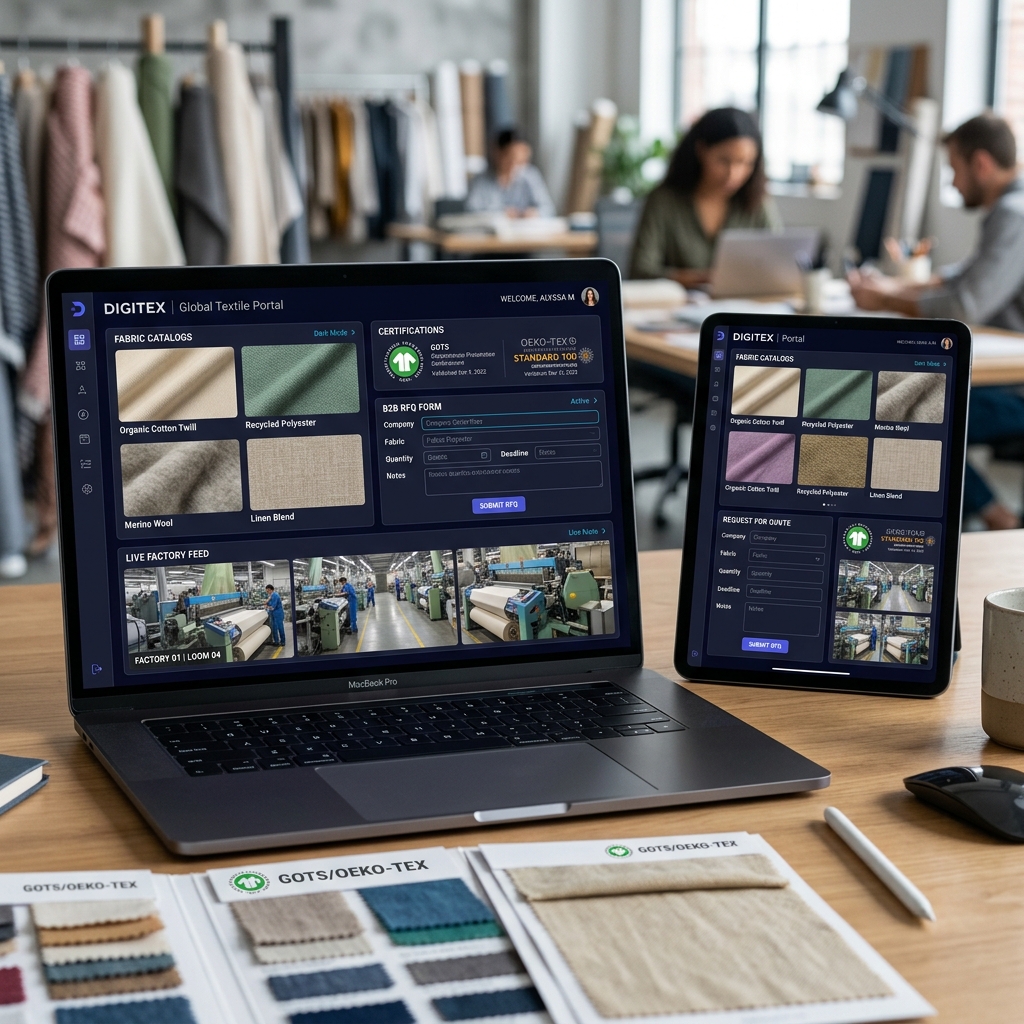
And this creates an important opportunity for textile manufacturers.
Your website is not simply an online company profile.
It can become your 24/7 global sales and buyer-acquisition channel.
In 2026, textile manufacturers need websites that clearly communicate their manufacturing capabilities, product range, certifications, quality standards and export capabilities while making it extremely easy for international buyers to enquire.
Here are 15 features that can make a textile manufacturing website more effective.
1. Professional B2B Website Design
A textile manufacturer's website needs to immediately communicate professionalism.
International buyers may evaluate your company based on:
- Factory capabilities
- Product quality
- Manufacturing capacity
- Certifications
- Export experience
- Product range
- Company history
- Response time
A modern B2B website should therefore have a clean and professional design instead of looking like a basic company brochure.
The first impression matters.
2. Clear Product Catalogue
One of the biggest mistakes textile companies make is displaying products without enough information.
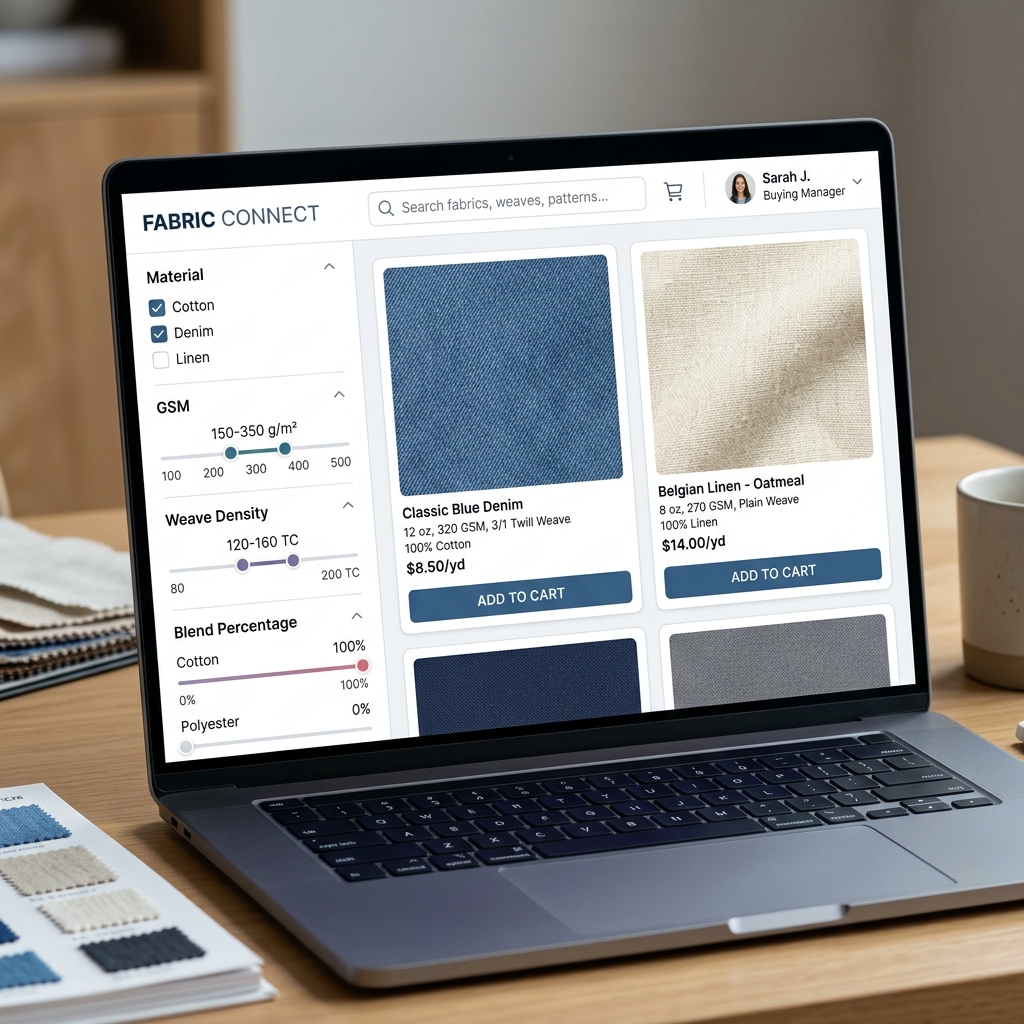
A proper digital product catalogue should allow buyers to explore products by category.
For example:
Fabrics
- Cotton Fabric
- Linen Fabric
- Denim Fabric
- Polyester Fabric
- Viscose Fabric
- Blended Fabric
- Organic Fabric
Garments
- T-Shirts
- Shirts
- Dresses
- Activewear
- Kidswear
- Workwear
- Uniforms
Each product should have useful specifications.
Include:
- Material
- Composition
- GSM
- Width
- Available colours
- Finishing
- MOQ
- Applications
- Customization options
This makes the website much more useful for B2B buyers. Learn how we engineer customized digital fabric portals in our specialized Textile Manufacturer Website Services.
3. Advanced Product Search and Filtering
If your company has hundreds of products, a simple product page isn't enough.
Buyers should be able to filter products based on:
Material
Fabric Type
GSM
Application
Colour
Finish
Sustainability
Product Category
This helps buyers quickly find the products relevant to their requirements.
4. Manufacturing Capability Page
International buyers want to know:
"Can this manufacturer actually handle my order?"
Create a dedicated manufacturing capabilities section.
Show:
- Production capacity
- Factory size
- Machinery
- Production lines
- Monthly capacity
- Quality control process
- Skilled workforce
- Packaging
- Warehousing
- Export capabilities
Don't simply say:
"We are a leading manufacturer."
Show the evidence.
5. Factory Tour Through Photos and Video
A factory photograph can communicate more than several paragraphs.
Show:
- Manufacturing floor
- Machinery
- Production process
- Quality inspection
- Packaging
- Warehouse
- Employees
- Finished products
Even better, create a short factory walkthrough video.
This helps international buyers understand that they are dealing with a real manufacturing operation.
6. Certifications and Compliance
For international B2B buyers, certifications can be a major trust signal.
Depending on your business, your website could showcase relevant certifications such as:
- OEKO-TEX
- GOTS
- GRS
- BCI
- ISO
- SA8000
- WRAP
- Sedex
- Fairtrade
Only display certifications that your company actually holds.
For each certification, explain:
What it means
Why it matters
What products/processes it applies to
This makes your website more credible.
7. Sustainable Manufacturing
Sustainability is increasingly important to global fashion and textile buyers.
Manufacturers should clearly communicate their sustainability practices.
For example:
- Organic materials
- Recycled fabrics
- Water-saving processes
- Waste reduction
- Renewable energy
- Sustainable dyes
- Responsible sourcing
- Recycling initiatives
Instead of simply creating a page titled:
"Our Sustainability"
show measurable information wherever possible.
For example:
X% recycled material
X% reduction in water consumption
X solar capacity
Specific information is more convincing than generic sustainability statements.
8. Private Label and OEM/ODM Services
Many fashion brands don't want ready-made products.
They want a manufacturing partner.
Your website should clearly explain whether you offer:
OEM
Manufacturing products according to the buyer's specifications.
ODM
Providing product development and manufacturing capabilities.
Private Label
Producing products that are sold under the buyer's brand.
Include the complete process:
Design → Sampling → Material Selection → Production → Quality Control → Packaging → Shipping
This can attract high-value B2B enquiries.
9. Custom Manufacturing Request
This can become one of the highest-value features on a textile website.
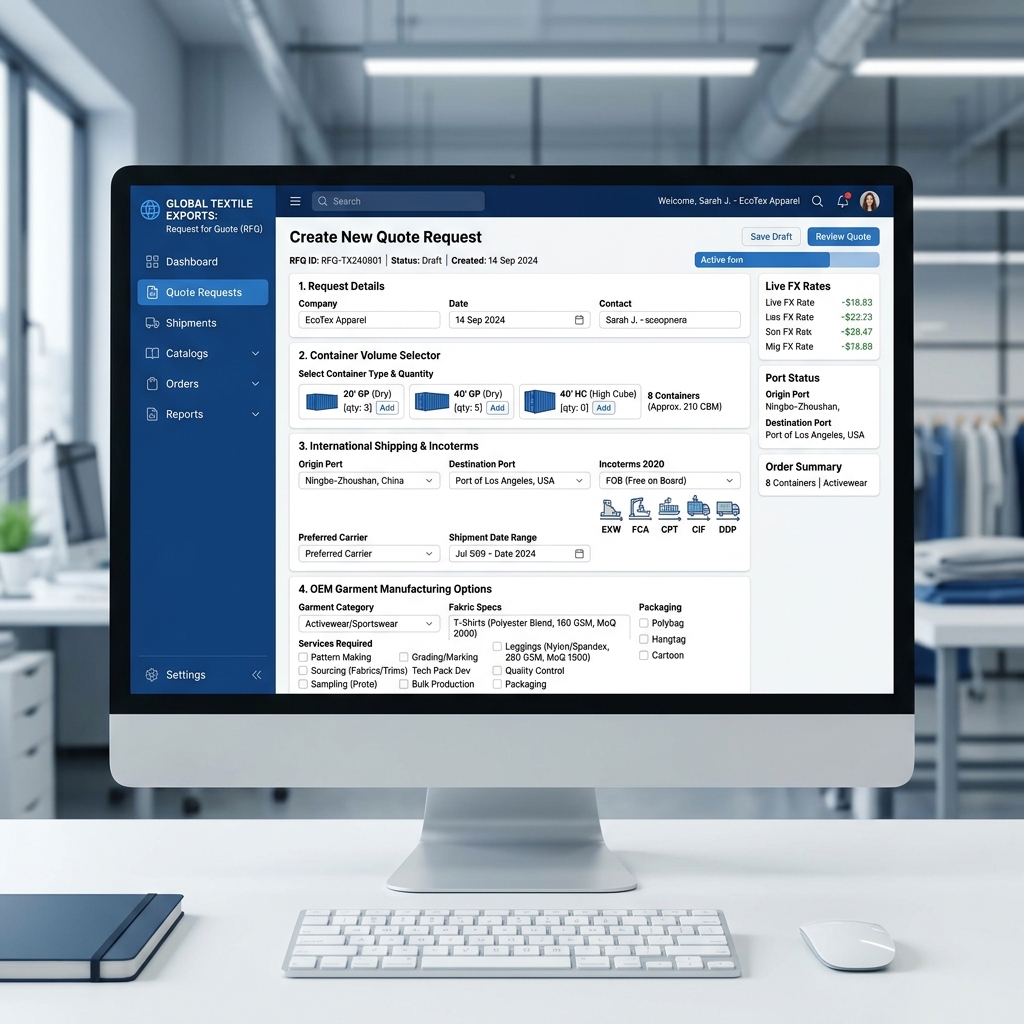
Instead of a generic:
"Contact Us"
button, provide:
Request a Manufacturing Quote
Ask buyers for:
- Product type
- Fabric/material
- Quantity
- GSM
- Colour
- Size/specifications
- Target market
- Delivery location
- Required delivery date
- Reference images
- Technical documents
The buyer can submit the requirement directly.
This turns the website into a lead qualification system.
10. Global Buyer Enquiry Form
A textile manufacturer may receive enquiries from:
- USA
- UK
- Germany
- France
- Italy
- Australia
- UAE
- Saudi Arabia
- Canada
- Netherlands
The website should make international enquiries simple.
A good form could ask:
Company Name
Country
Product Requirement
Quantity
Budget / Target Price
WhatsApp / Phone
Message
Upload Requirement
This gives your sales team more information before the first conversation.
11. Multi-Language Website
If your target customers are international, consider supporting multiple languages.
Depending on your markets:
- English
- German
- French
- Spanish
- Italian
- Arabic
However, don't automatically translate everything with poor-quality machine translation.
For important commercial pages, professional translation and localization can provide a much better buyer experience.
12. Textile Industry SEO
A textile website should not target only:
"Textile Manufacturer"
That's extremely broad.
Build dedicated pages around specific buyer searches.
For example:
Cotton Fabric Manufacturer
Organic Cotton Fabric Manufacturer
Garment Manufacturer in India
Private Label Clothing Manufacturer
Sustainable Textile Manufacturer
Denim Fabric Manufacturer
Home Textile Manufacturer
Textile Exporter
OEM Clothing Manufacturer
These pages can target specific buyer intent. Learn how we implement high-intent B2B search strategies in our B2B Industrial SEO Services.
13. Industry and Application Pages
Another powerful SEO strategy is to create pages based on applications.
For example:
Fashion
Fabrics for fashion brands and apparel manufacturers.
Hospitality
Hotel linens, uniforms and hospitality textiles.
Healthcare
Medical textiles and healthcare garments.
Workwear
Industrial uniforms and protective apparel.
Home Textiles
Bedsheets, curtains, towels and other home textile products.
Each page can explain:
- Product options
- Materials
- Manufacturing capabilities
- Customization
- Certifications
- MOQ
- Applications
- Enquiry process
This creates more opportunities to reach specific buyers.
14. Case Studies and Buyer Success Stories
International buyers want proof.
Create case studies such as:
How We Manufactured 100,000 Custom T-Shirts for a European Brand
or:
How We Helped a Fashion Brand Develop a Sustainable Fabric Collection
Include:
- Client requirement
- Challenge
- Manufacturing process
- Solution
- Quantity
- Quality process
- Result
Don't reveal confidential client information without permission.
But where permitted, real case studies can dramatically increase trust.
15. CRM + Enquiry + Follow-Up Automation
Generating a lead is only the beginning.
Imagine receiving enquiries from:
Website + Google + LinkedIn + WhatsApp + Trade Shows
Without proper tracking, leads can easily be missed.
A modern textile website can connect enquiries to a CRM.
For example:
New Enquiry
↓
Sales Contacted
↓
Requirement Received
↓
Sample Requested
↓
Sample Sent
↓
Quotation Sent
↓
Negotiation
↓
Order Confirmed
This gives the sales team a clear view of every potential buyer.
Bonus: AI-Powered Textile Product Finder
AI can also become an interesting feature for textile manufacturers.
Instead of making buyers search through hundreds of products, provide an intelligent product finder.
A buyer could type:
"I need lightweight organic cotton fabric for summer clothing."
The system could recommend relevant products.
Or:
"We need sustainable fabric for premium hotel uniforms."
The website could suggest suitable materials and invite the buyer to request a quotation.
This creates a much more modern B2B buying experience.
The Future of Textile Manufacturing Websites
The traditional textile website looks like this:
Home → About Us → Products → Factory → Contact
That's no longer enough.
A modern textile manufacturing website should look more like:
Search / AI / LinkedIn / Trade Platforms
↓
SEO Landing Page
↓
Product Discovery
↓
Manufacturing Capability
↓
Certifications & Trust
↓
Custom Requirement
↓
RFQ / Sample Request
↓
CRM
↓
Sales Follow-up
↓
Order
This is the direction B2B websites are moving toward.
Why Textile Manufacturers Need a Custom Website
Every textile manufacturer has different products, capabilities and sales processes.
One company may manufacture fabrics.
Another may specialize in garments.
Another may offer private-label production.
Another may focus on sustainable textiles.
Another may export exclusively to European markets.
A generic template cannot always represent these differences effectively.
A custom textile manufacturing website can be built around your:
- Product catalogue
- Manufacturing capabilities
- Buyer requirements
- MOQ
- RFQ process
- Certifications
- Export markets
- CRM
- SEO strategy
- Lead-generation process
The website becomes part of your sales infrastructure rather than simply a digital brochure. Explore our comprehensive Custom Web Development Solutions.
How a Textile Website Can Generate Global Buyers
A successful strategy could look like this:
Step 1 — SEO
Create pages targeting high-intent searches.
Step 2 — Content
Publish useful textile industry content.
Examples:
- How to Choose the Right Fabric for Your Product
- Cotton vs Polyester: Which Fabric Is Better?
- What Is GSM in Fabric?
- Sustainable Textile Manufacturing Guide
- How Private Label Clothing Manufacturing Works
Step 3 — AI Search Optimization
Structure your content so that AI-powered search systems can understand your expertise, products and manufacturing capabilities. Read more about AI engine optimization in our AI Search Optimization (AEO/GEO) Guide.
Step 4 — LinkedIn
Share:
- Factory videos
- New products
- Manufacturing processes
- Certifications
- Case studies
- Industry insights
Step 5 — Conversion
Send traffic to dedicated product and manufacturing pages.
Step 6 — Lead Capture
Use RFQ, sample request and custom manufacturing forms.
Step 7 — CRM
Track and follow up with every qualified buyer.
Final Thoughts
The global textile industry is highly competitive.
Buyers have more options than ever before.
Your website therefore needs to answer an important question within seconds:
"Why should I trust this manufacturer with my production?"
A strong textile manufacturing website should communicate:
Capability + Quality + Certifications + Sustainability + Experience + Products + Trust + Easy Enquiry
And most importantly, it should make it easy for a buyer to take the next step.
The goal isn't simply to create a beautiful textile website.
The goal is to build a digital B2B sales platform that helps your manufacturing business reach buyers around the world.
Frequently Asked Questions
What should a textile manufacturing website include?
A textile manufacturing website should include product catalogues, manufacturing capabilities, certifications, factory information, sustainability practices, OEM/ODM services, enquiry forms, RFQ functionality, case studies and clear contact options.
How can a textile manufacturer get international buyers online?
International buyers can be reached through SEO, industry-specific landing pages, LinkedIn, content marketing, AI search optimization, digital advertising and a conversion-focused website.
What keywords should textile manufacturers target?
Useful keywords include textile manufacturer, fabric manufacturer, garment manufacturer, textile exporter, private label clothing manufacturer, OEM clothing manufacturer, sustainable textile manufacturer and product-specific manufacturing keywords.
Is SEO important for textile manufacturers?
Yes. SEO can help manufacturers reach buyers who are actively searching for specific textile products, suppliers and manufacturing partners.
Should textile manufacturers have a product catalogue online?
Yes. A detailed digital catalogue helps buyers understand product specifications, applications, materials, customization options and manufacturing capabilities before submitting an enquiry.
Can a textile website include an RFQ system?
Yes. A custom website can include Request for Quotation forms where buyers submit product requirements, quantities, specifications, documents and other information directly to the manufacturer.
Build a Global-Ready Textile Manufacturing Website with Joy Digital
At Joy Digital, we build custom websites designed around business goals—not just templates.
For textile manufacturers, garment manufacturers and exporters, we can create websites with:
- Custom UI/UX
- Product catalogue
- Advanced product filtering
- Manufacturing capability pages
- OEM/ODM services
- Private-label pages
- RFQ / quotation forms
- Sample request system
- WhatsApp integration
- CMS / Admin panel
- SEO-friendly architecture
- AI Search / GEO-ready content structure
- CRM integration
- Analytics and conversion tracking
Your factory can be local. Your website shouldn't be.
Build Your Global Textile Manufacturing Website
Related Joy Digital Services:
Recommended Related Resources
Frequently Asked Questions
Digital marketing strategist and Next.js web developer focusing on search optimization and conversion rate growth.